Tolstoy, Gandhi, King — and Nærland. For fifty years Tore Nærland has followed in their footsteps, holding one conviction: dialogue is the answer to conflict, especially people to people. Here is his story in ten chapters, drawn from the anniversary book 'Bike for Peace — 50 Years on Wheels of Peace' by Erik Berge, printed in 2026 and carried around the world.
1 · 1828–1968
The roots
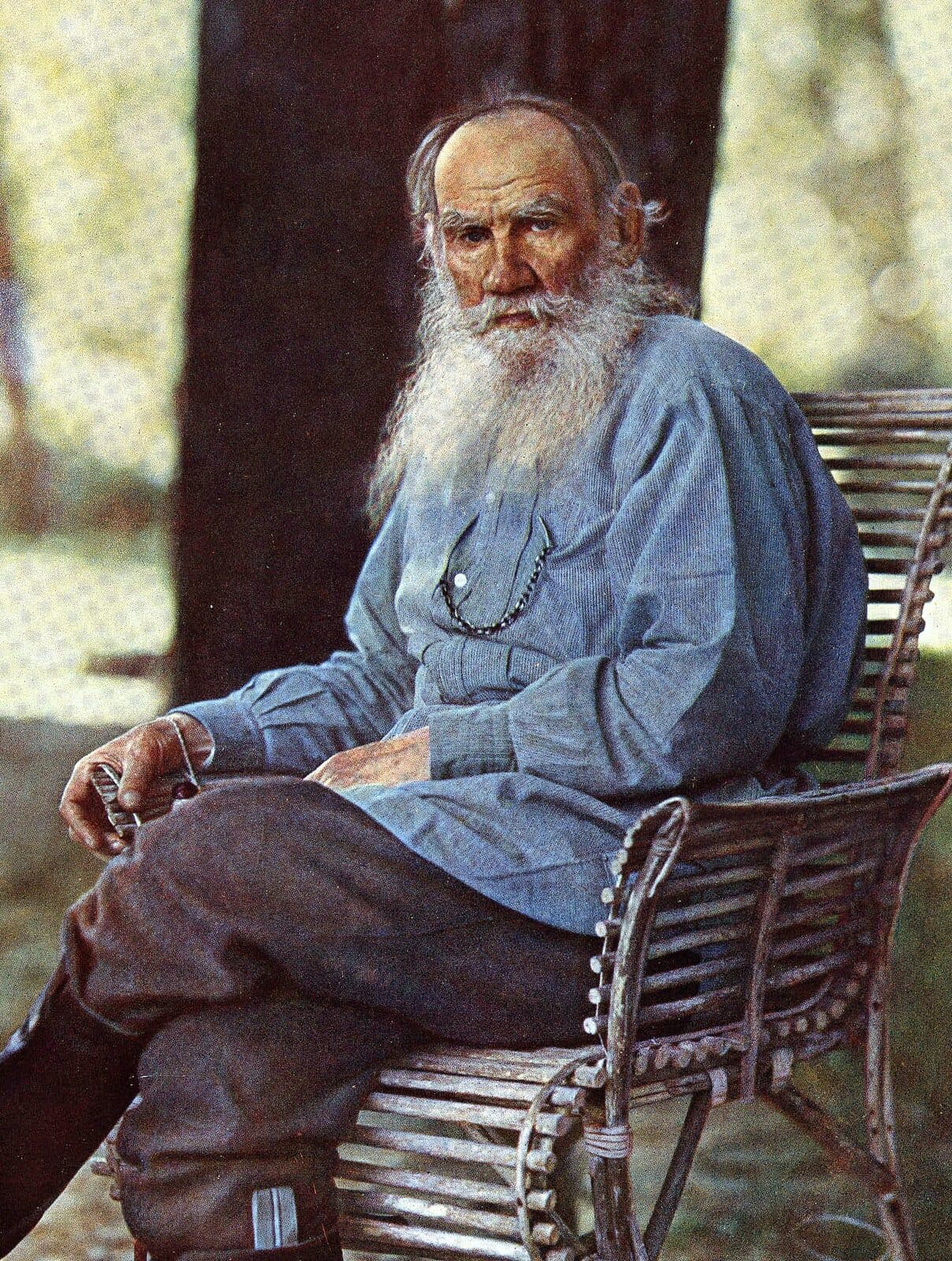
Leo Tolstoy (1828–1910) — the writer who made nonviolence a way of life.
On the cover of the anniversary book, four faces stand side by side: Leo Tolstoy, Mahatma Gandhi, Martin Luther King Jr. — and Tore Nærland from Jæren, Norway. Three of them belong to world history; the fourth has followed in their footsteps for fifty years, with the bicycle as his tool. All four share one conviction: violence can never be defeated by violence, there is a human being in every adversary, and dialogue — especially people to people — is the answer to conflict. That is the legacy Tore has cycled out into the world.
2 · 1977
The boy from Jæren
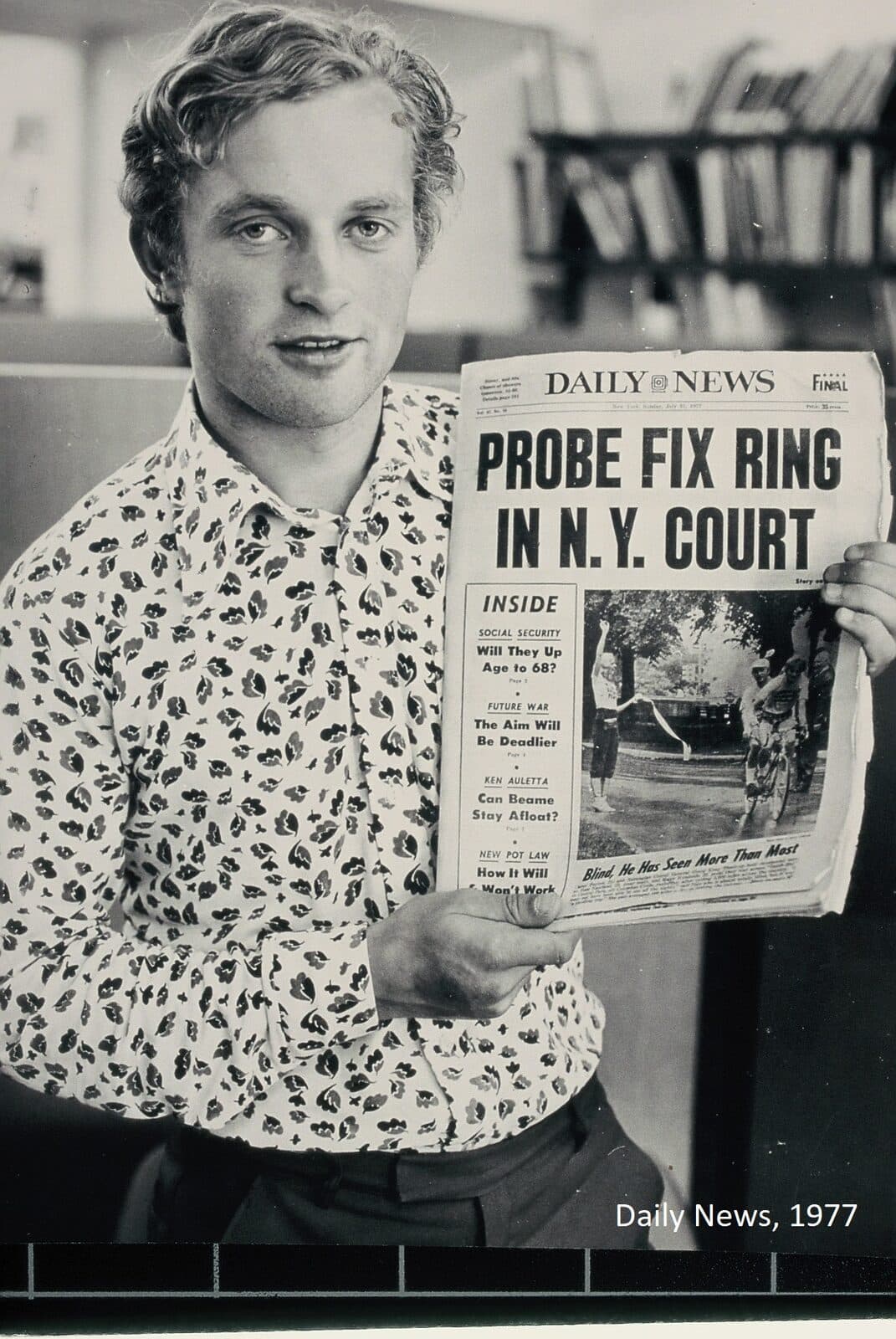
Daily News covers Tore's Coast to Coast ride, 1977.
Tore Nærland grew up on a farm in Jæren, Norway, and gradually lost his sight. Rather than letting that close doors, he got on a tandem bicycle — where two riders must pedal in step and trust each other to move forward. In 1977 he cycled across the USA, coast to coast, and the American press took notice of the Norwegian who refused to sit still. The seed of Bike for Peace was sown.
3 · 1978
It begins in Northern Ireland
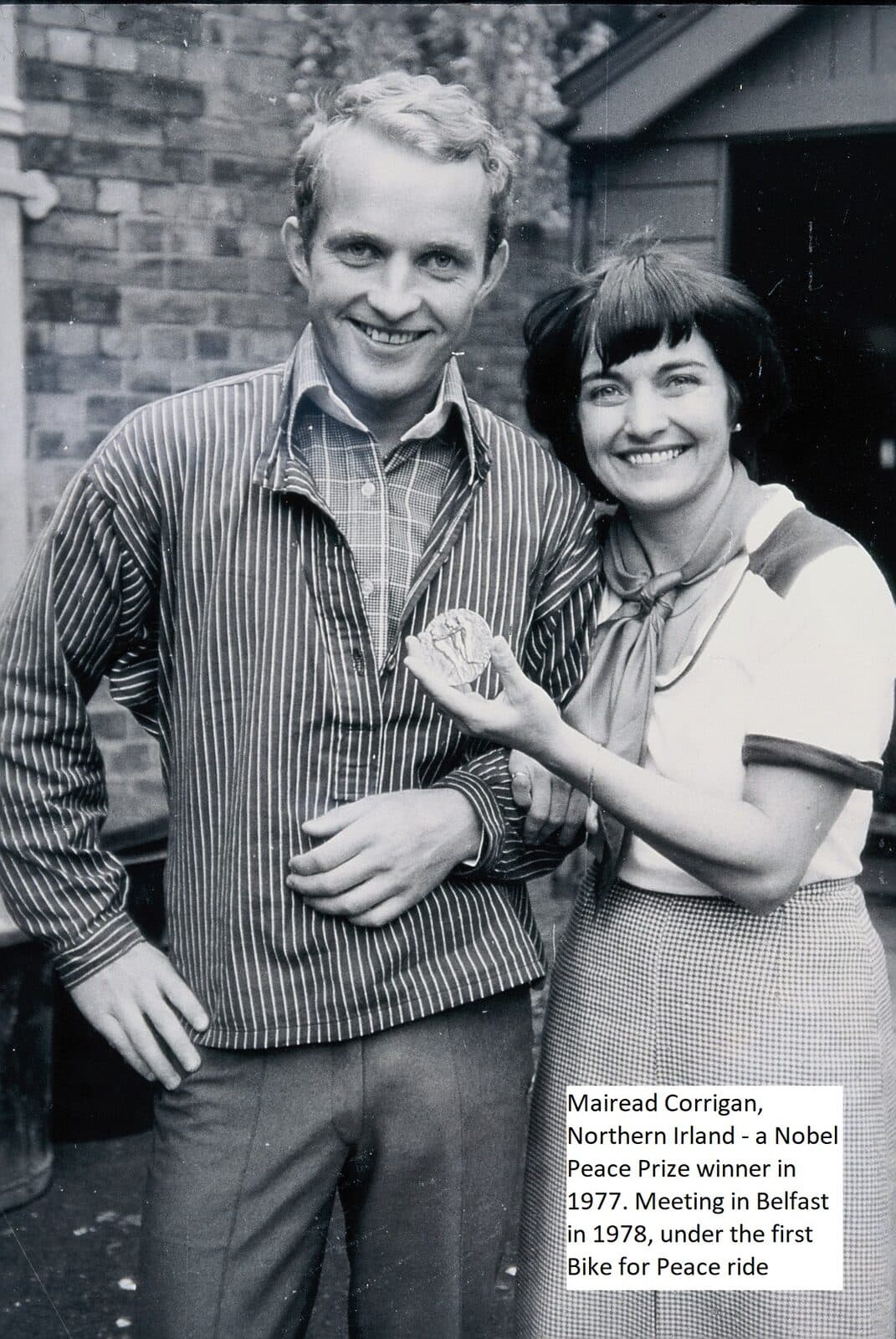
Mairead Corrigan, Nobel Peace Prize 1976, Belfast 1978.
The first peace ride went where the violence was worst: Northern Ireland during the Troubles. In Belfast, Tore met Nobel laureate Mairead Corrigan of the Peace People — an encounter that set the pattern for everything that followed. Ride into conflict zones, not to take sides, but to meet the people on both sides.
4 · 1983
The 1983 Peace Ride
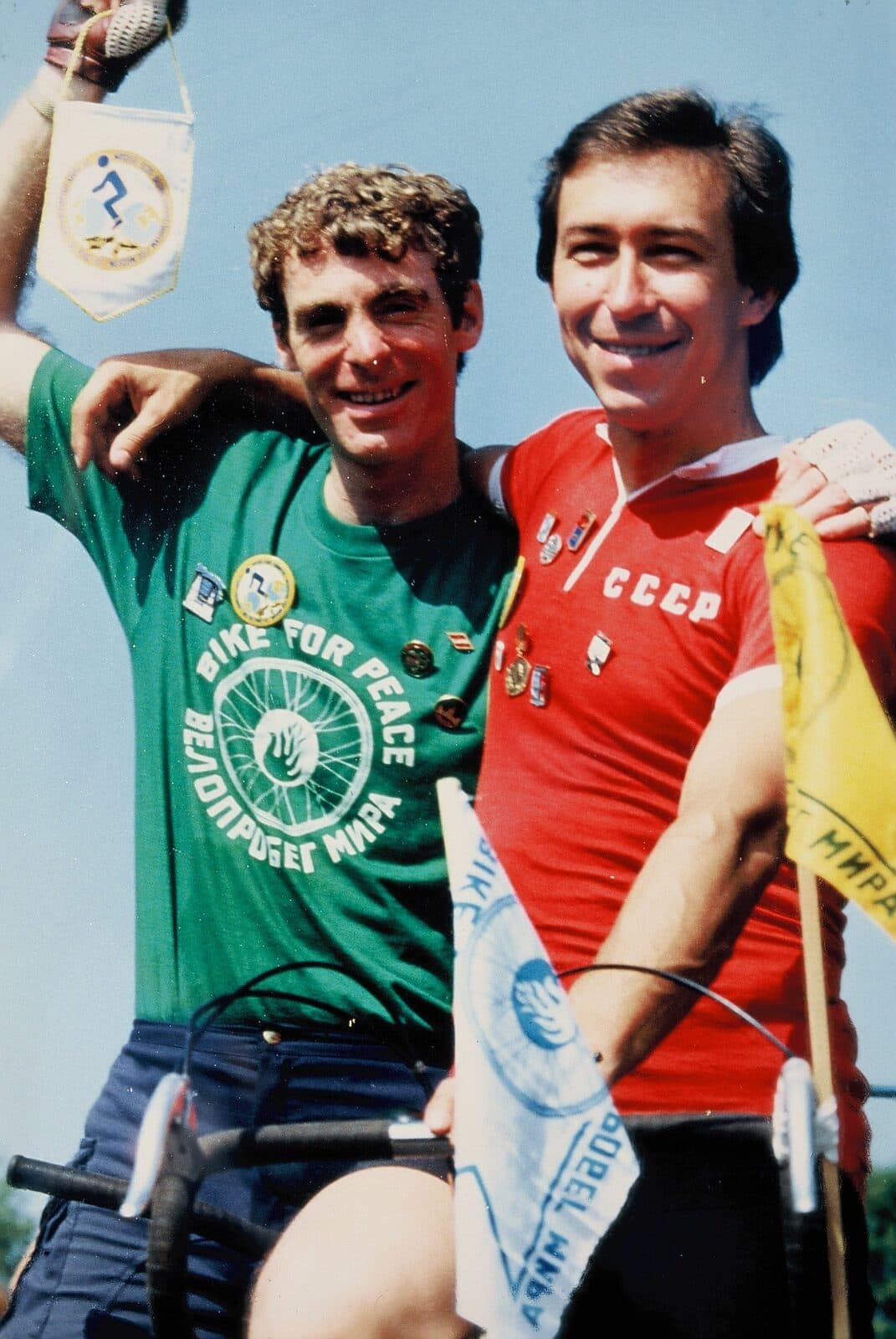
Christopher Senie (USA) and Vladimir Semenets (USSR) on a tandem, 1983.
At the coldest point of the Cold War, Bike for Peace did the unthinkable: twenty Soviet and twenty Scandinavian-American cyclists rode together from Moscow via Oslo to New York and Washington. American Christopher Senie and Soviet rider Vladimir Semenets shared a tandem the whole way — and Tore addressed the US Congress on disarmament. The ride became the template for everything that followed.
5 · 1989
The Wall comes down
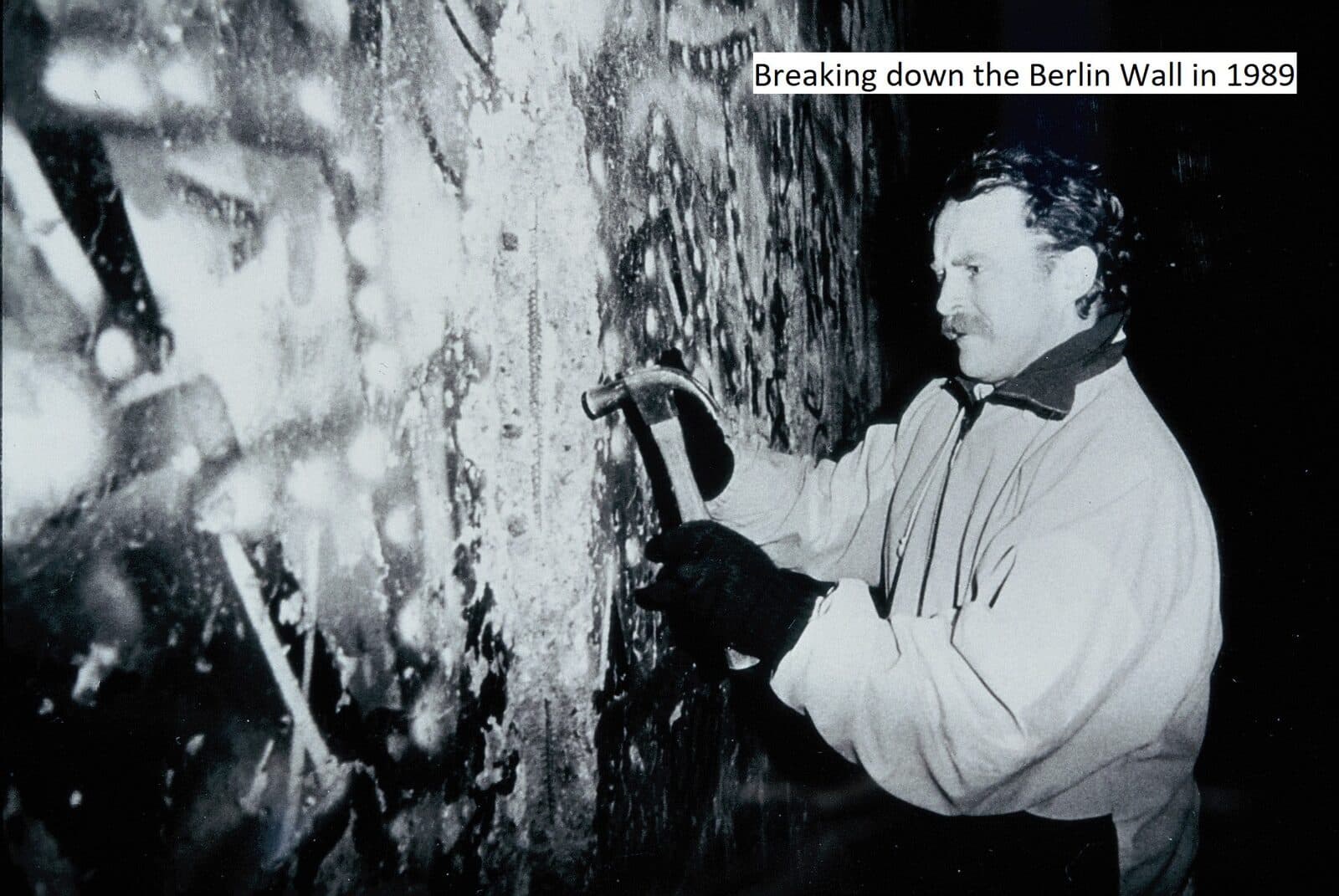
Tore tearing down the Berlin Wall, 1989.
In November 1989 the Berlin Wall fell — the dividing line Bike for Peace had spent a decade cycling across. Tore was there, breaking off pieces of the wall with his own hands. One piece was presented to Norway's foreign minister Kjell Magne Bondevik: a tangible reminder that walls raised by people can also be torn down by people.
6 · 1999
The World Ride
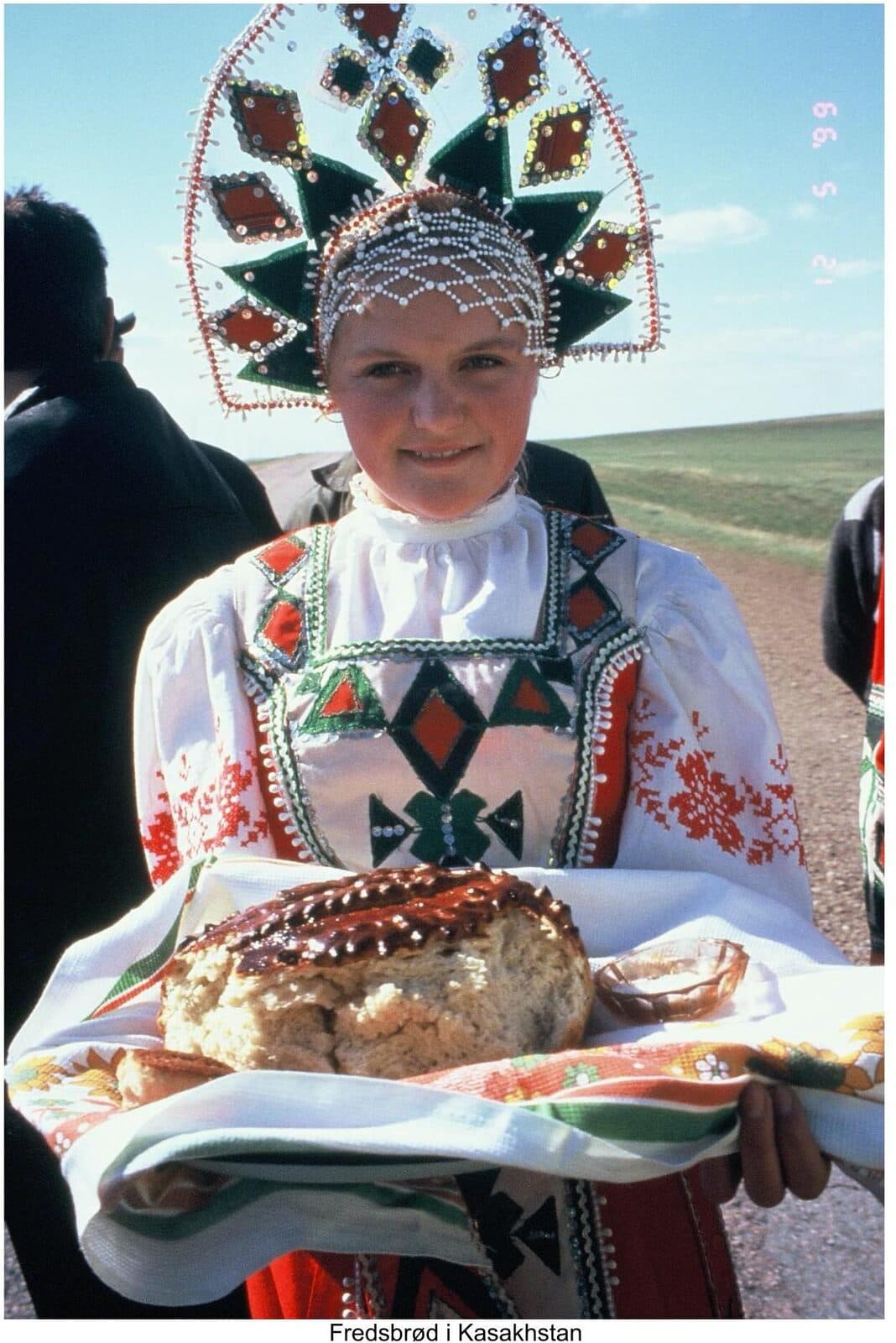
Peace bread in Kazakhstan during the World Ride, 1999.
From 18 March to 29 June 1999, Bike for Peace cycled from Beijing via Almaty and Moscow to Bergen. Kazakhstan made the deepest impression — the land that had hosted the Soviet Union's nuclear tests, and that voluntarily gave up the world's fourth-largest nuclear arsenal. School visits, peace bread and crowded streets showed what the message of peace means where the price of nuclear weapons is still borne by ordinary people.
7 · 2014
Around the world in 72 days
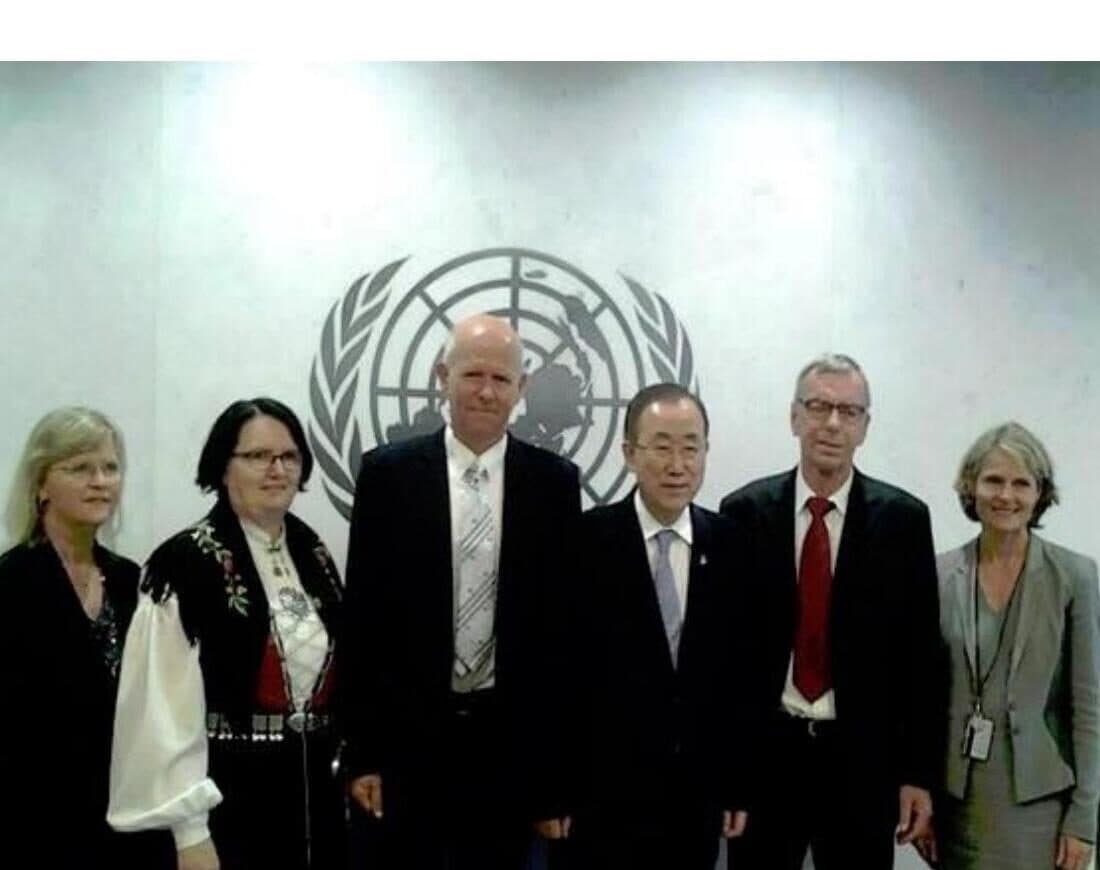
Meeting UN Secretary-General Ban Ki-moon, New York 2014.
In 2014 Bike for Peace travelled around the world in 72 days — from the Houses of Parliament in London via Pope Francis in St Peter's Square to UN Secretary-General Ban Ki-moon in New York. The list of Secretaries-General the organisation has met — Pérez de Cuéllar, Boutros-Ghali, Ban Ki-moon — testifies to four decades of patient UN diplomacy. In October 2026 we return to New York with the 2045 Appeal.
8 · 2017
The King's Medal of Merit
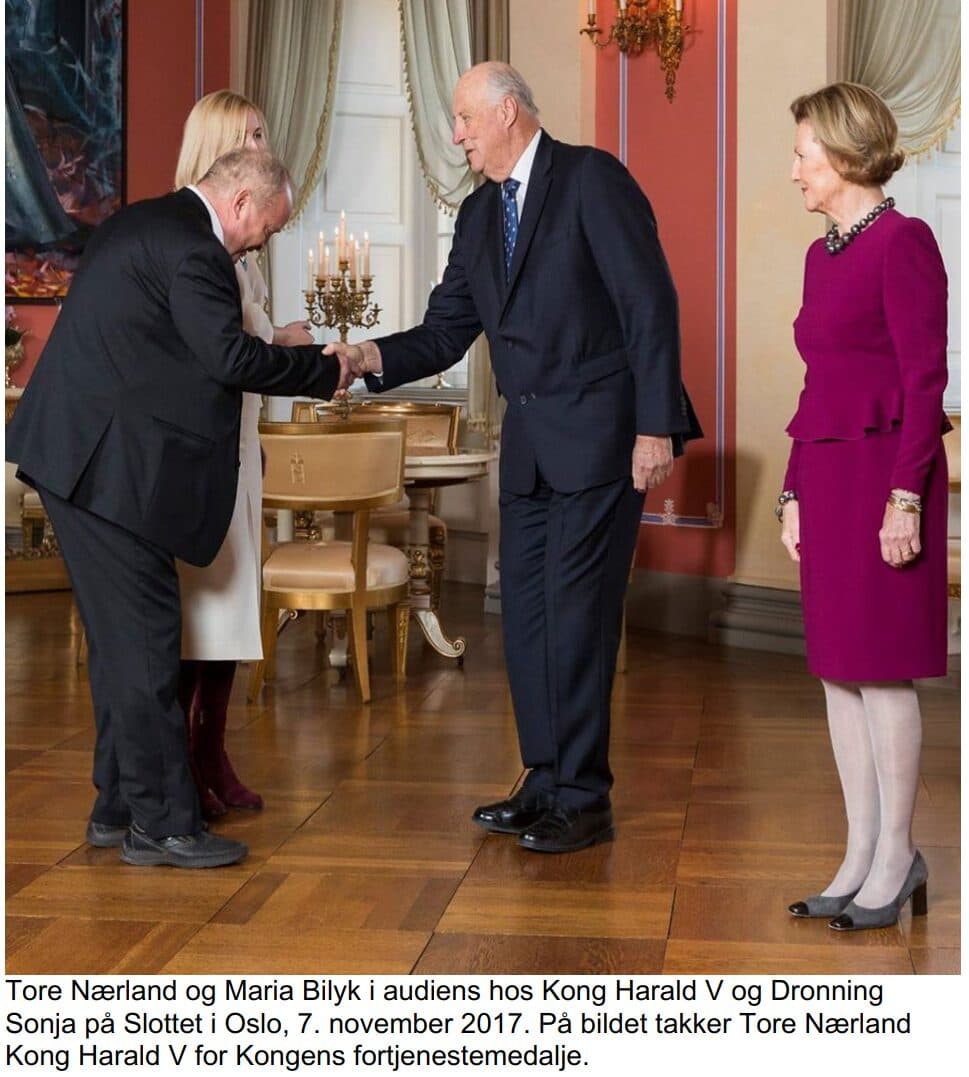
Tore thanks King Harald V for the Medal of Merit, Royal Palace 2017.
On 7 November 2017 Tore Nærland received the King's Medal of Merit for his decades of peace work — the Norwegian state's official recognition of a life's work that began with a tandem in Jæren and has left wheel tracks in more than a hundred countries.
9 · 2026
Norway–Russia peace dialogue
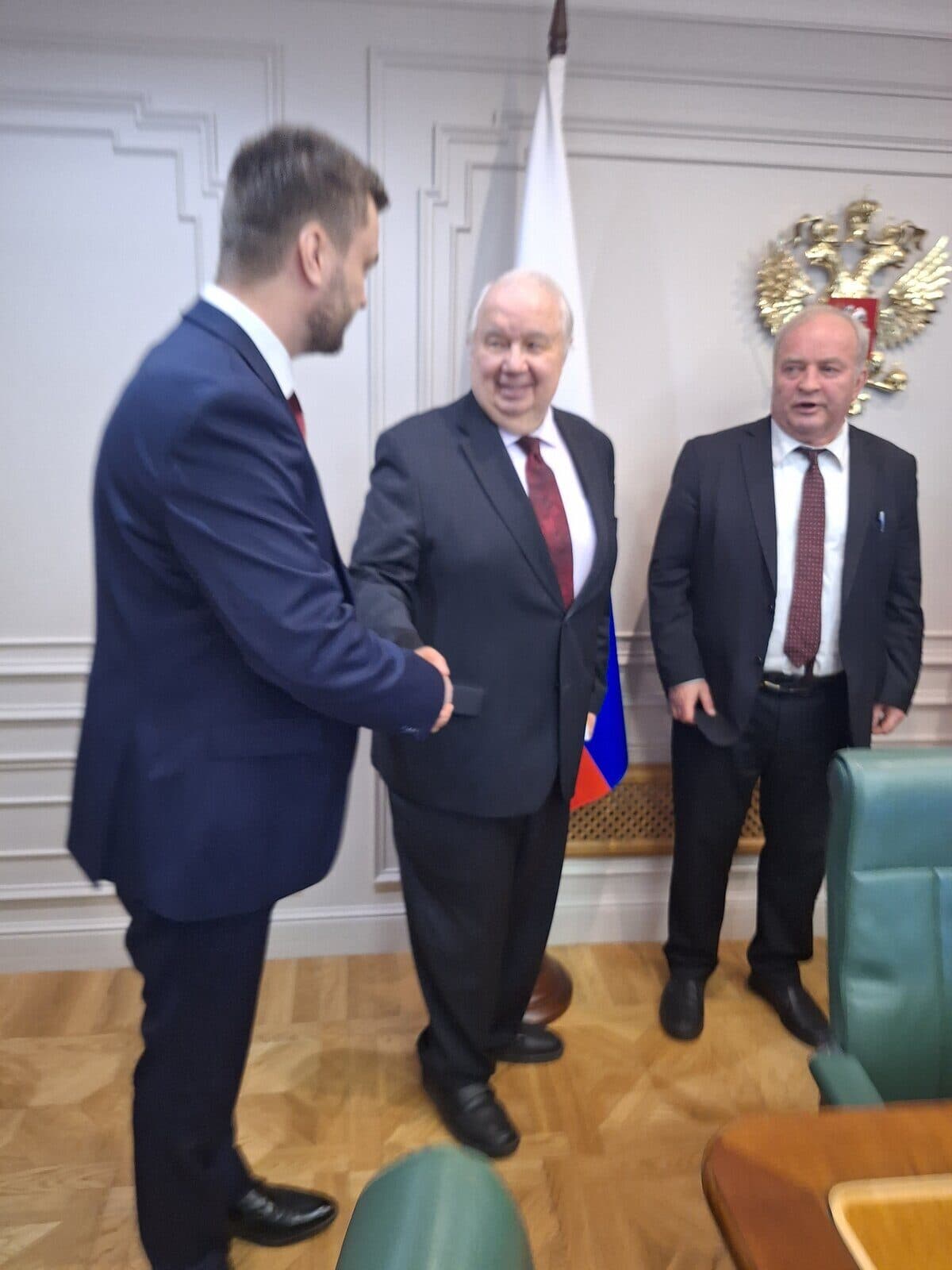
Erik Berge and Sergey Kislyak at the Federation Council, Moscow, March 2026.
When most cut their ties with Russia, Bike for Peace went the other way — true to the line drawn in 1983. In March 2026 the peace dialogue took the delegation from Murmansk Arctic University to the Federation Council in Moscow and to MGIMO, where five students asked questions in Norwegian, Swedish and Danish. "Boycotting young people solves nothing. It only builds higher walls," Tore said afterwards.
10
Mandela and the legacy
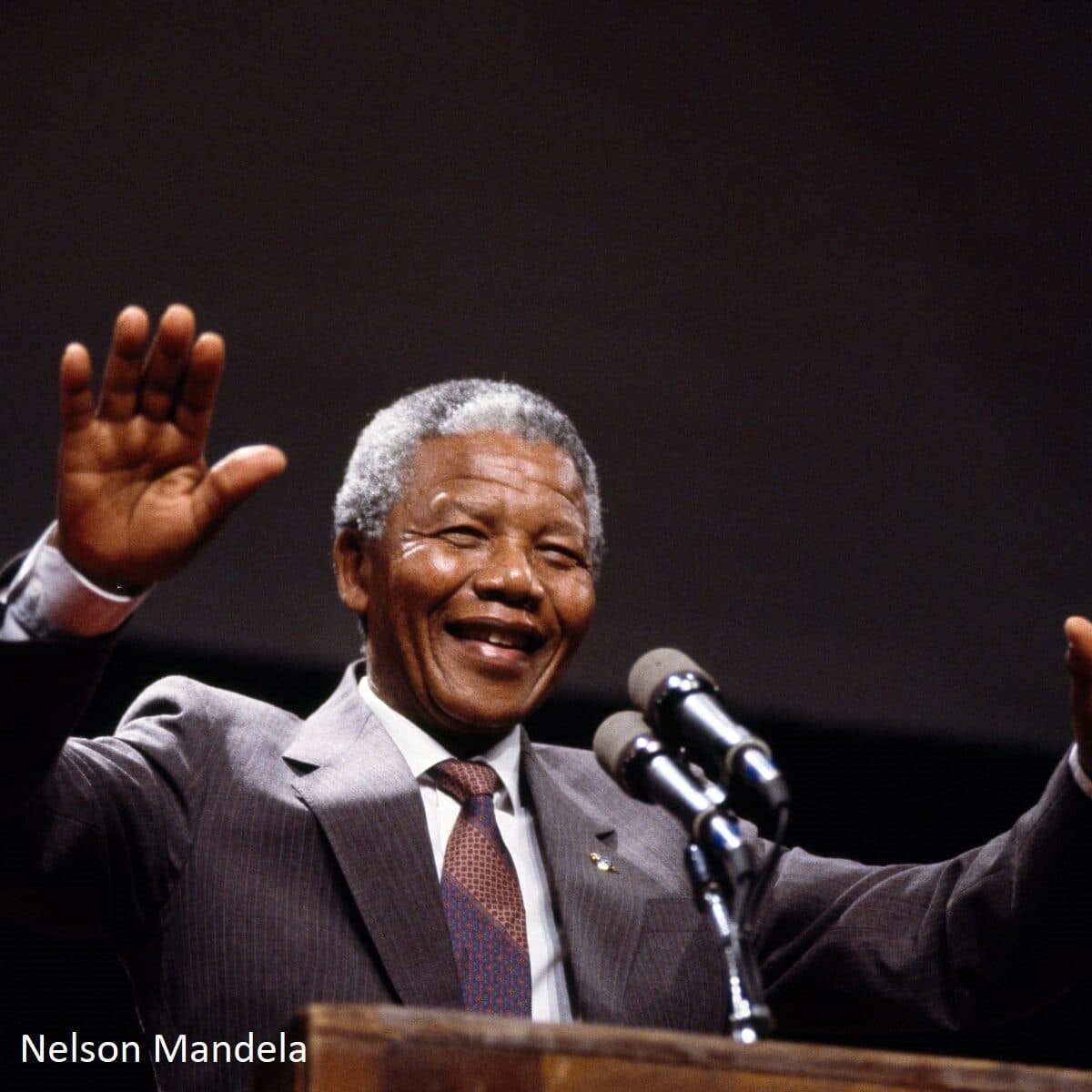
Tore Nærland met Nelson Mandela — the greatest bridge-builder of all.
Foremost among all those Tore has met stands Nelson Mandela — the man who spent 27 years in prison and still chose reconciliation over revenge. From Tolstoy through Gandhi and King to Nærland runs an unbroken line: the belief that human beings can choose conversation over the sword. Mandela is the confirmation from outside that the line holds. That is the legacy Tore carries forward — towards a nuclear-weapon-free world by 2045.
Join the next chapter
The story continues through 2026 and 2027, as we engage all nine nuclear powers with one appeal: a nuclear-weapon-free world by 2045. Every name travels with us to the UN in New York.